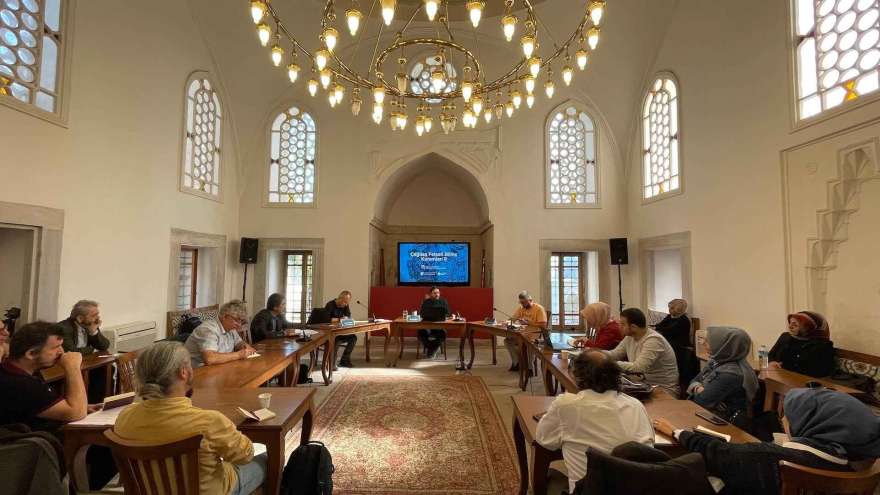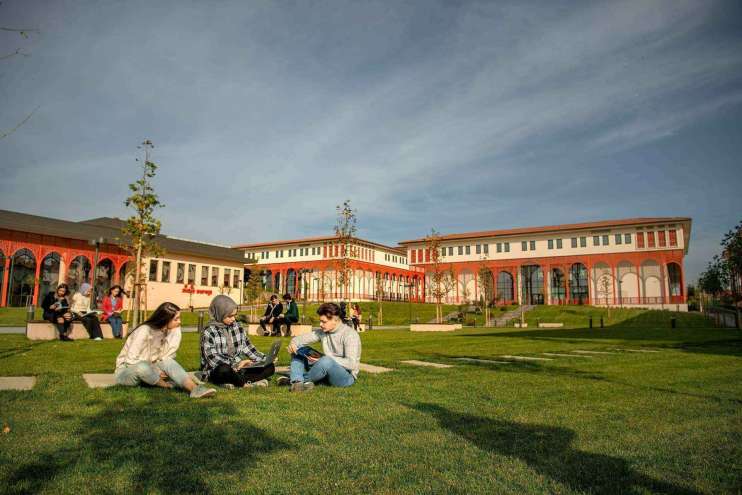
Organised by the Department of Philosophy at Ibn Haldun University, the “Muslim-Christian Conference on Philosophy, Religion and Science” and “Celebration of Cambridge Elements on Islam and the Sciences” will take place on 22–24 May 2026 at the University’s Süleymaniye Campus in Istanbul.
The conference is designed as a high-level academic forum for MA and PhD students, early-career faculty members, and established scholars working in philosophy, theology, and related disciplines.
The event aims to foster critical dialogue, scholarly exchange, and mutual learning among Muslim and Christian academics. Its thematic scope includes epistemology and cognitive science, consciousness, mind and soul, cosmology, evolution, anthropology, naturalism, science and religion, religion and psychology, science and scripture, moral psychology, and evolutionary ethics. In doing so, the conference seeks to deepen reflection on the conceptual and theological dimensions of contemporary scientific and philosophical inquiry.
The programme features keynote lectures by prominent scholars including Nidhal Guessoum, Enis Doko, Stefano Bigliardi, Kelly James Clark, Willem Drees, Denis Alexander, Steven Horst, Paul Rezkalla, Seniye Vatansever, and Parandis Tajbakhsh. In parallel sessions, emerging scholars from a range of institutions will present their current research in an international and intellectually demanding setting.
In addition to its conference sessions, the event will include a dedicated celebration of the “Cambridge Elements on Islam and the Sciences” series. This component of the programme underscores the wider scholarly significance of the gathering and highlights recent contributions to debates on Islam, philosophy, religion, and the sciences.
The conference is hosted by Kelly James Clark and Enis Doko, and co-organised by Nidhal Guessoum and Stefano Bigliardi. Through this international event, Ibn Haldun University reaffirms its commitment to supporting advanced academic inquiry into the philosophical, theological, and scientific questions that shape contemporary intellectual life.